/ By The Thyolo House
Mount Mulanje for Beginners: A Tea Country Host's First-Climb Guide
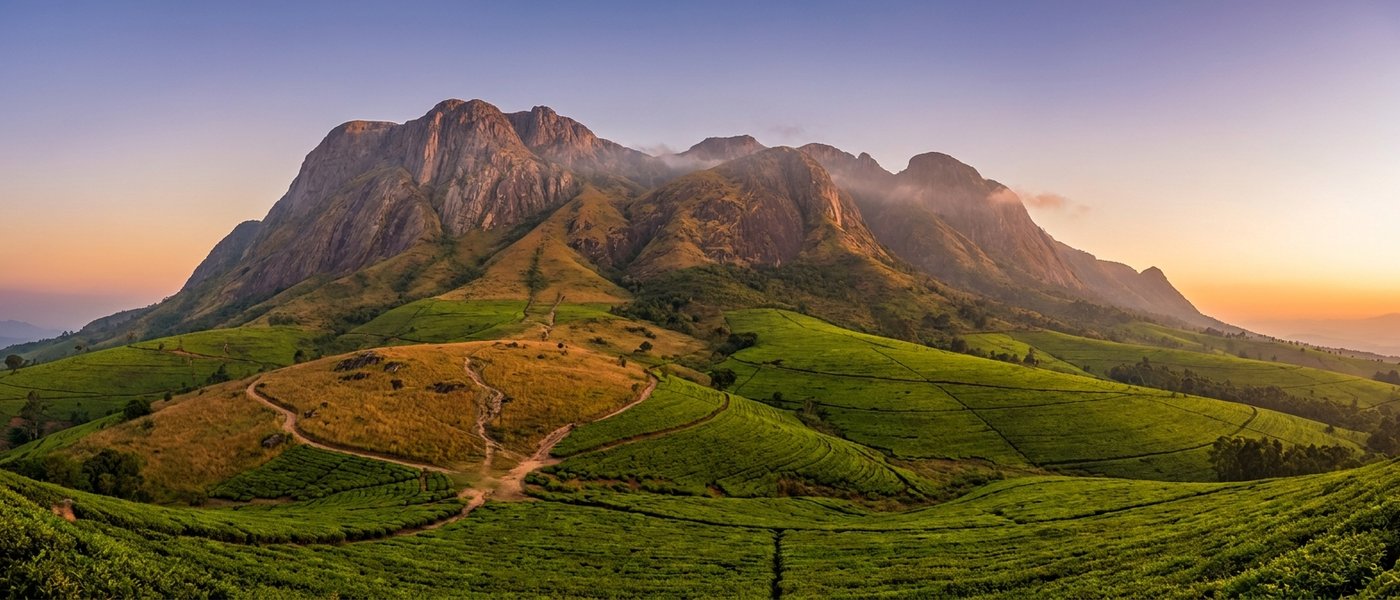
Most people who ask me about climbing Mount Mulanje for beginners arrive at The Thyolo House looking slightly nervous. They've seen the photos — that great granite massif rising 2,400 metres straight out of the tea plains like something out of a Tolkien sketch — and they've read enough trip reports to know Sapitwa, the highest peak at 3,002 metres, literally translates as "don't go there" in Chichewa. Fair enough. But here's the thing: Mount Mulanje for beginners is genuinely possible, even rewarding, if you pick the right route, the right month, and give yourself a soft landing before and after. I've watched first-timers do it well, and I've watched first-timers do it badly. This is what I've learned, written from a tea country veranda about forty minutes' drive from the trailheads.
Who This Guide Is For (and Who Should Skip It)
This guide is for someone reasonably fit — you can walk briskly for three or four hours without misery, and you do some form of cardio two or three times a week — but who has not done a serious mountain before. You might have day-hiked in Europe, or done a Kilimanjaro independent visit without summiting, or simply walked a lot of city pavements and felt good doing it. That's our beginner.
It's not for someone who hasn't exercised in years. Mulanje rises sharply from the plains at around 650 metres elevation — the first day's climb is typically 900 to 1,000 metres of steep ascent, often on uneven granite slabs and through forest roots. There are no chairlifts, no shortcuts, no medical evacuation by helicopter if your knees give out four hours from the road. If the longest walk you've done this year is from the car park to the supermarket, please spend three months building a base before you book. The mountain will wait.
And if you're a serious climber — you've done Mount Kenya, Mount Meru, multi-day Drakensberg traverses — you'll want a different article. The Sapitwa summit push, the full Chambe-to-Lichenya circuit, the technical scrambling routes: those are real mountaineering and deserve their own write-up.
The Three Beginner-Friendly Routes — Likabula, Lujeri, and the Skyline Day-Walk
Mulanje is a massif, not a mountain. It sprawls across 650 square kilometres with 20 peaks and six trailheads onto the plateau. For someone tackling Mount Mulanje for beginners, three options stand out.
The Chambe Basin Loop (the classic first climb)
This is what I recommend to nine out of ten first-timers. You start at Likhubula village — about 15 kilometres from Chitakale on the Mulanje side — and climb the Skyline Path up to the Chambe Plateau. It's roughly a three-day, two-night trip: day one is the hard day (the steep ascent, five to six hours at beginner pace), day two is a gentle plateau walk between Lichenya Hut and Chambe Hut, and day three you descend. The plateau day is genuinely lovely — described by one repeat visitor as "a breeze, even for someone who'd never hiked." The whole route delivers what you came for: cloud forest, granite, those famous "Island in the Sky" views, and a real summit-camp experience without needing to scramble Sapitwa.
The Skyline Path as a one-night option
If three days feels like too much, you can do Skyline up to Chambe Hut, sleep one night, and come back down. Fit hikers do the ascent in three hours; beginners should plan five. The advice every guide gives is the same: start at dawn so you arrive at the hut with daylight to spare. The path begins gently through tea estates and miombo woodland, then turns sharply uphill after the river crossing for that 900-metre push to the plateau edge.
The Likhubula day-walk (no overnight)
For travellers who genuinely don't want to sleep on a mountain but want the Mulanje experience, the Likhubula Forest day-walk — including the falls and the lower reaches of the trail — gives you the feel of the massif in five or six hours. Private operators bundle this as a day tour for around USD 75 per person, lunch included. You won't summit anything, but you'll walk into proper indigenous forest, see the granite walls towering above, and be back at the boutique rooms in time for sundowners.
What Your Body Actually Needs: Pace, Altitude, and the Pre-Climb Night at Thyolo House
Mulanje is not an altitude mountain in the technical sense — at 3,002 metres, Sapitwa sits below the threshold where altitude sickness becomes a serious risk for most people. What gets you isn't thin air. It's the relentless steepness, the heat at the base, the cold at the top, and the way the granite punishes ankles and knees on the descent. People underestimate the descent every single time.
The fitness benchmark I give first-timers is honest: if you can walk or jog for an hour, three times a week, with one of those sessions including hills or stairs, you're ready. Your guide will set a pace that lets you breathe through your nose. If you can't breathe through your nose, you're going too fast — say so.
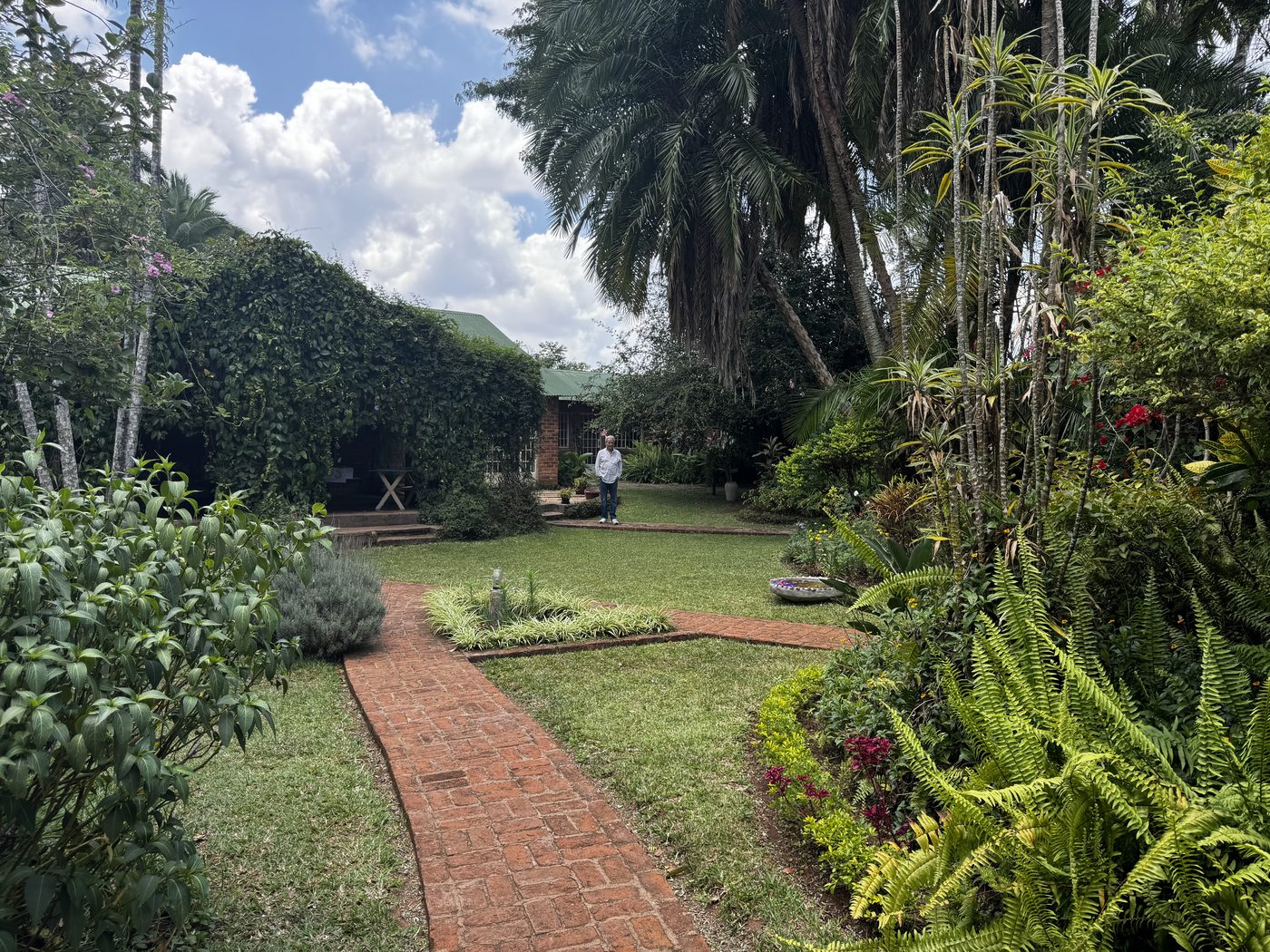
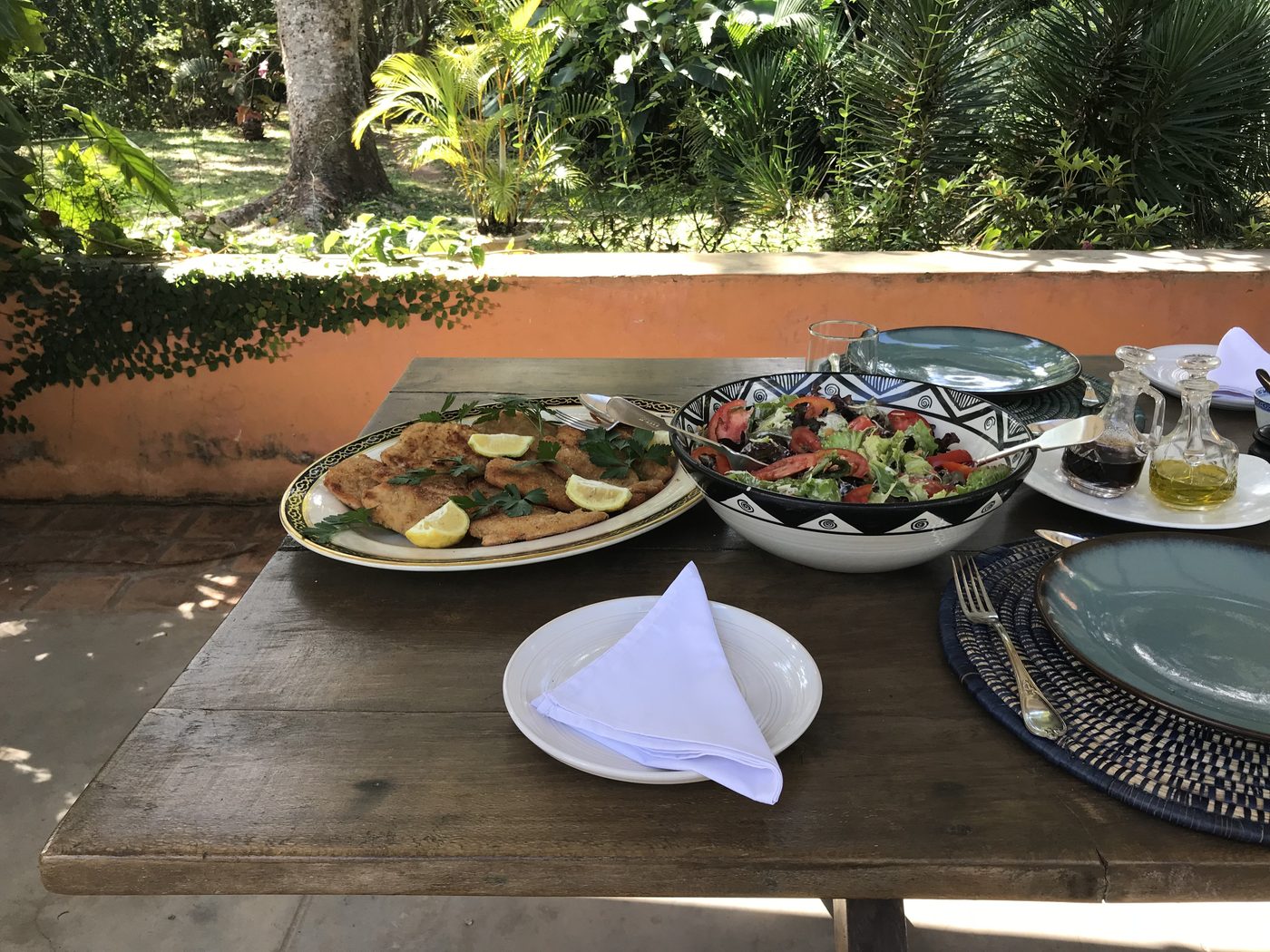
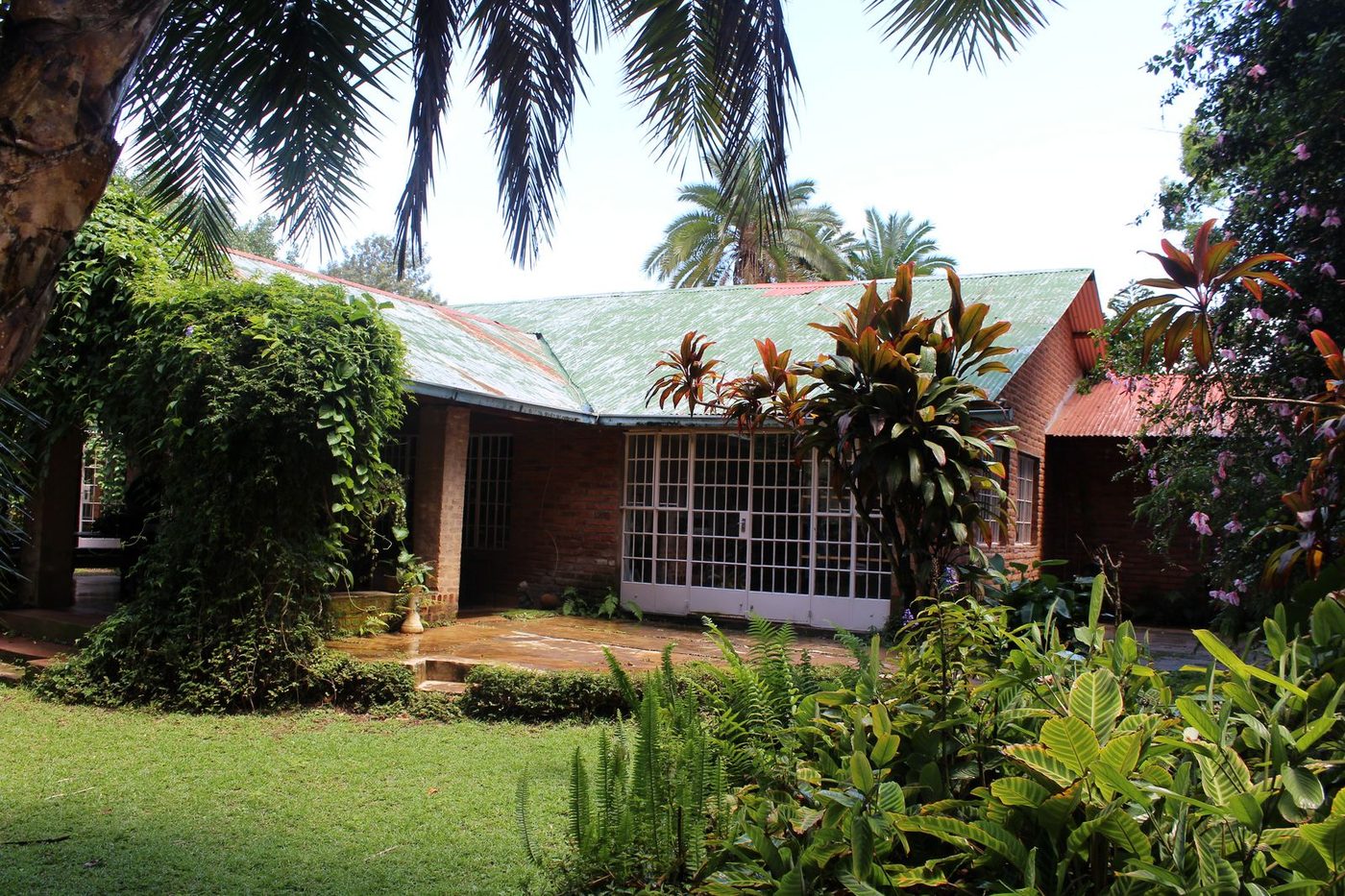
The pre-climb night matters more than people realise. Arriving in Mulanje town at sunset, eating whatever you can find, sleeping badly in a noisy guesthouse, then climbing in the morning is a recipe for a miserable day one. A calmer option is to sleep the night before at The Thyolo House, where we're 40 minutes from Blantyre and roughly an hour from the Likhubula trailhead. You get a quiet bed, an Italian dinner with garden-grown vegetables, a proper breakfast, and you arrive at the trailhead by eight or nine in the morning rested rather than wrung out. Your guide will thank you.
The Pack List I Hand to First-Timers (Boots, Layers, Snacks, Cash)
Beginners almost always overpack and under-prepare at the same time. Here's the working list, refined over many seasons of watching people limp back down with blistered heels and not enough cash to tip their porter.
- Proper hiking boots, broken in. Not trainers. Not new boots straight from the box. Walk in them for at least two weeks before you arrive.
- Two pairs of merino or wool hiking socks. Cotton socks plus sweat plus granite equals blisters within four hours.
- A waterproof shell jacket. Even in dry season, the plateau gets fog and wind. A light Gore-Tex layer weighs nothing and saves you from a cold night.
- A warm mid-layer (fleece or down). The huts have fireplaces but the temperature on Chambe at night in July can drop near freezing.
- Long trekking trousers and one quick-dry T-shirt per day.
- A wide-brim hat and sunscreen. The base of the mountain is hot; UV at altitude is unforgiving.
- A 2-litre water bottle or hydration bladder. Caretakers at the huts provide buckets of stream water — you'll want a small purification tablet supply or a filter.
- Headlamp with spare batteries. Hut electricity does not exist.
- High-energy snacks: nuts, dried fruit, energy bars, biltong. Bring more than you think; share with Your guide.
- Basic first aid: blister plasters, ibuprofen, antihistamines, rehydration salts. Likhubula has no pharmacy.
- Cash in Malawi kwacha. No ATM at the trailhead. Bring enough for entry fees, hut fees, guide and porter wages, watchman tips, and a comfortable margin.
- A small day pack inside your main pack for the plateau walk on day two — your porter takes the heavy bag to the next hut while you walk light.
Guides, Porters, and the Mountain Club Hut System — How Booking Really Works
A guide is essential on Mulanje. This isn't an upsell — it's that the trail network is genuinely confusing in fog, the granite slabs lose their cairn markers, and people get seriously lost every year. The guides and porters at Likhubula are unionised through the Forestry office and work on a rotation system, which means everyone gets fair work and you're not haggling with a freelancer outside a guesthouse.
Current rates, roughly: USD 25–30 per day for a guide, USD 20–25 per day for a porter, both per group rather than per person. A cook (worth it for a three-independent visit) is about USD 25 per day. You'll also pay a one-time entry fee of MK 1,000 per person, parking at the Likhubula Tourism Centre or CCAP of about MK 2,000 per day, and MK 1,000 per adult per night for hut fees. Tip the hut watchman MK 500 per person per night and the car watchman MK 1,000 per car per night. Members of the Mountain Club of Malawi get 50% off hut, guide, and porter fees if you're considering the membership.
The 10 mountain huts are run jointly by the Department of Forestry and the Mulanje Mountain Conservation Trust. They have beds, mattresses, chairs, tables, firewood, fireplaces, and a caretaker who brings water buckets from the nearest stream. They do not have showers, electricity, or running water. Lichenya Hut is the largest — sleeps 20-plus, two fireplaces — and Chambe Hut is the most popular and accessible. Bookings are first-come, first-served and no one is turned away, but you should still book through InfoMulanje or the Likhubula Forestry Station ahead of time, especially in dry season. For a deeper look at hut logistics, see our Mulanje mountain huts booking guide. And if you want a wider survey of routes and gear, the hiking routes and gear guide covers it.
Weather Windows and the Best Months for a First Climb
The dry season runs May through October. May and June are cool and clear with crisp visibility — my favourite months for a first climb. July and August get genuinely cold on the plateau at night (pack the warm layer). September and October warm up and you start to see haze building from the dry-season fires across the region, but trails are still dry and reliable.
November through April is the wet season. The trails turn to slippery granite waterfalls, the fog settles in for days, the rivers become serious crossings, and visibility on the plateau drops to a few metres. Experienced climbers do it. First-timers should not. If your dates fall in November–April and you really want a Mulanje experience, do the Likhubula day-walk with a guide on a clear morning and call it a win.
Coming Off the Mountain: Hot Showers, Italian Dinners, and a Day to Recover at The Thyolo House
The descent day is the day your knees discover muscles they didn't know about. By the time you reach Likhubula and untie your boots, you have one thought: hot shower. You have a second thought: real food, real bed, no granite for at least 36 hours.
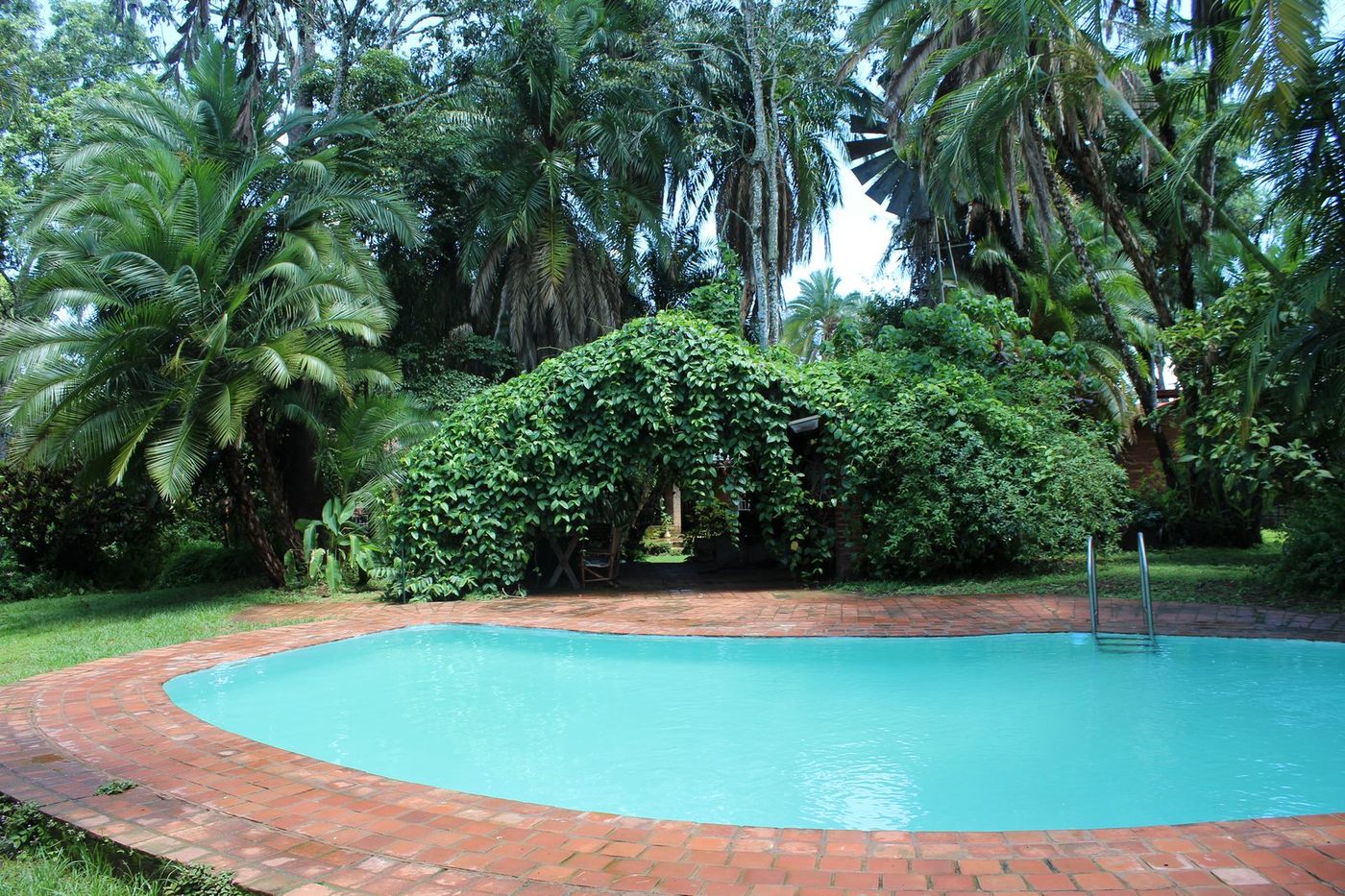
This is where the pre-and-post Mulanje stay at The Thyolo House does its quiet work. Forty minutes back to us in Thyolo, a long shower in one of the boutique rooms, a swim in the pool to flush the lactic acid out of your legs, and dinner in the restaurant — Flavia, our Italian-Malawian owner, runs the kitchen on garden-grown ingredients and a properly stocked pasta drawer. People who come off the mountain on a Saturday afternoon tend to stay for two nights and spend the recovery day doing very little: a quiet garden morning, pool in the afternoon, art workshop if Flavia is teaching that week.
To book a pre-climb or post-climb stay at The Thyolo House, message us on WhatsApp or email thethyolohouse@gmail.com. Transport, guides, porters, and mountain arrangements must be booked directly with MMCT, licensed guides, or transport providers.
Five Beginner Mistakes I See Every Season (and How to Avoid Them)
Patterns repeat. Here are the five I see most often.
- Starting too late on day one. Beginners arrive at the trailhead at 10 or 11am, get caught by afternoon heat on the open lower slopes, and reach the hut exhausted at sunset. Start by 8am at the latest. Earlier is better.
- Wrong boots, no break-in. New boots straight from the box guarantee blisters. So do running shoes pretending to be hiking shoes. Two weeks of city walks in your actual boots before you arrive is non-negotiable.
- Not enough kwacha. There is no ATM in Likhubula. Add up your fees — entry, parking, hut, guide, porter, cook, watchman tips, and a 20% margin — and bring it all in cash from Blantyre or Limbe before you head to the trailhead.
- Underestimating the descent. Day three knees are real. Trekking poles help enormously, especially on the granite slabs above Likhubula. Borrow or buy a pair before you come.
- No rest day after. People book a flight out of Blantyre the morning after they descend. They limp through the airport. Build in at least one full recovery day. That's the day The Thyolo House can serve a slow lunch at The Thyolo House while you don't move.
Mount Mulanje for beginners is one of the most rewarding first mountains in Africa precisely because it doesn't pretend to be easy and doesn't punish you for being honest about your fitness. Pick the Chambe Basin loop, climb in June, hire a guide through the Forestry office, pack proper boots and enough cash, and give yourself a quiet night either side at a place that understands what you're about to do — or what you've just done. Whether you're three months out and just starting to plan, or you've booked your guide already and need a bed for the night before, The Thyolo House can confirm its own room and restaurant availability before or after the climb. Message us on WhatsApp for accommodation; arrange guides, transport, and mountain logistics directly with the relevant operators.