
/ By The Thyolo House
Chambe Peak Mulanje: Africa's Longest Rock Face & How to Hike It
What Makes Chambe Peak Special — Africa's Longest Rock Face
If you have spent any time researching Mount Mulanje, you have probably come across Chambe Peak Mulanje in lists of the massif's must-do climbs. At 3,002 metres, it is the third-highest point on the plateau — behind Sapitwa and Manene — and the one that draws rock climbers from across the world. The reason is its west face: a sheer wall of syenite rock rising 1,700 metres from the valley floor, making it the longest rock climbing route in Africa.
But you do not need to be a rock climber to appreciate Chambe. The hiking route to the summit via the Skyline Path is one of the most rewarding treks on Mulanje, combining dense montane forest, exposed granite scrambles, and views that stretch across southern Malawi and into Mozambique. On a clear morning, the panorama from the top is one of those experiences that stays with you long after you have come down.
The peak is also ecologically significant. The plateau around the summit supports stands of the critically endangered Mulanje cedar — Widdringtonia whytei, Malawi's national tree — along with grasslands, heather communities, and the kind of high-altitude silence that makes the scramble worth every step.
Since Mount Mulanje's inscription as a UNESCO World Heritage Site in July 2025 — Malawi's third, after Lake Malawi National Park and the Chongoni Rock Art Area — interest in peaks like Chambe has only grown. It deserves the attention.
The Skyline Path Route to Chambe Hut (Step by Step)
The standard approach to Chambe Peak begins at Likabula Forest Station, the main trailhead for Mount Mulanje, located on the western flank of the massif. This is where you register, pay your park entry fees, and arrange a compulsory guide.
Stage 1: Likabula to Chambe Hut
The trail from Likabula climbs steadily through plantation pine before entering indigenous montane forest. The path is well-trodden but steep in places, with sections of exposed rock that can be slippery after rain. You gain altitude quickly, and the forest thins as you approach the plateau edge.
The hike to Chambe Hut takes approximately 3 to 3.5 hours at a steady pace. It is not the longest approach on Mulanje, but the gradient is relentless — expect around 1,200 metres of elevation gain. The path is rocky and uneven throughout, so proper hiking boots are essential, not optional.
Your guide will set the pace. Most Likabula-based guides know this trail intimately and will point out features along the way — particular trees, bird calls, the spot where the rock changes colour. Listen to them. They know things the guidebooks do not.
Stage 2: Chambe Hut to the Summit
From Chambe Hut, the route to the peak involves scrambling over granite boulders and exposed rock slabs. This is not a walk-up summit — it is considered the most challenging standard ascent on Mulanje, with sections that require hands-on scrambling and a head for heights. Vertigo-prone hikers should think carefully before committing to the final push.
The scramble from the hut to the summit adds roughly 2 to 3 hours depending on conditions and your comfort with exposed terrain. Your guide is not optional here — route-finding on the upper slopes can be tricky, particularly when the infamous chiperone mist rolls in.
Chambe Peak as a Day Hike — Is It Possible?
Technically, yes. Fit and experienced hikers can reach Chambe Hut from Likabula in 3 to 3.5 hours, summit in another 2 to 3, and descend the same way. That is a long day — roughly 8 to 10 hours of hiking with significant elevation gain and loss — but it is doable if you start at first light and the weather cooperates.
That said, most people choose to overnight at Chambe Hut, and for good reason. The summit scramble is demanding enough without the pressure of racing daylight on the descent. The hut is comfortable by mountain standards, the views from its veranda are spectacular, and spending a night on the plateau gives you something a day hike cannot: the mountain at dawn, when the Likhubula Valley fills with mist and the rock glows pink.
If you do attempt it as a day hike, the key constraints are:
- Start early: Be at Likabula by 6:00 AM at the latest. Earlier is better.
- Travel light: Day pack only — water, snacks, rain jacket, headtorch (in case you are descending in fading light).
- Fitness: You need to be genuinely fit, not just optimistic. The descent is hard on the knees.
- Weather window: If clouds close in by mid-morning, you may summit in a whiteout with no views. The dry season months (May to October) offer the best odds of clear skies.
For first-time visitors to Mulanje, we would recommend the overnight option. The mountain rewards patience, and the experience of waking up at altitude is worth the extra logistics.
Rock Climbing on the Chambe Face
The Chambe West Face is where Mulanje shifts from hiking destination to serious mountaineering objective. The 1,700-metre wall is divided into two distinct sections: a lower face of approximately 600 metres and an upper face of 1,100 metres, separated by a 250-metre jungle terrace band that cuts horizontally across the cliff.
The first routes were established in the late 1970s by Frank Eastwood, who later published a guidebook to the face. Since then, a handful of multi-pitch lines have been climbed, but the face remains relatively undeveloped compared to big walls in other parts of the world. The rock is syenite — hard, rough, and generally sound, though some sections are vegetated and require careful route selection.
What Climbers Should Know
- Grade: Existing routes range from moderate to hard (up to around E3/5.11 on some pitches). The difficulty lies as much in the length, remoteness, and approach as in the technical climbing.
- Commitment: A full ascent of the west face is a multi-day undertaking. Bivouacs on the wall are necessary. This is expedition-grade climbing, not a sport crag.
- Logistics: You will need to arrange porters, carry significant gear, and be entirely self-sufficient on the wall. There is no rescue infrastructure.
- Permits: Required. Arrange through the Forestry Office at Likabula.
- Season: The dry months (June to September) offer the most stable conditions. Afternoon storms during the wet season can be violent at altitude.
For non-climbers, the Chambe Face is still worth seeing. The view from Chambe Hut looks directly at the south-east face, and the scale of the cliff is genuinely jaw-dropping — one of those geological features that photographs simply cannot capture.
Views From the Top — Likhubula Valley and Beyond
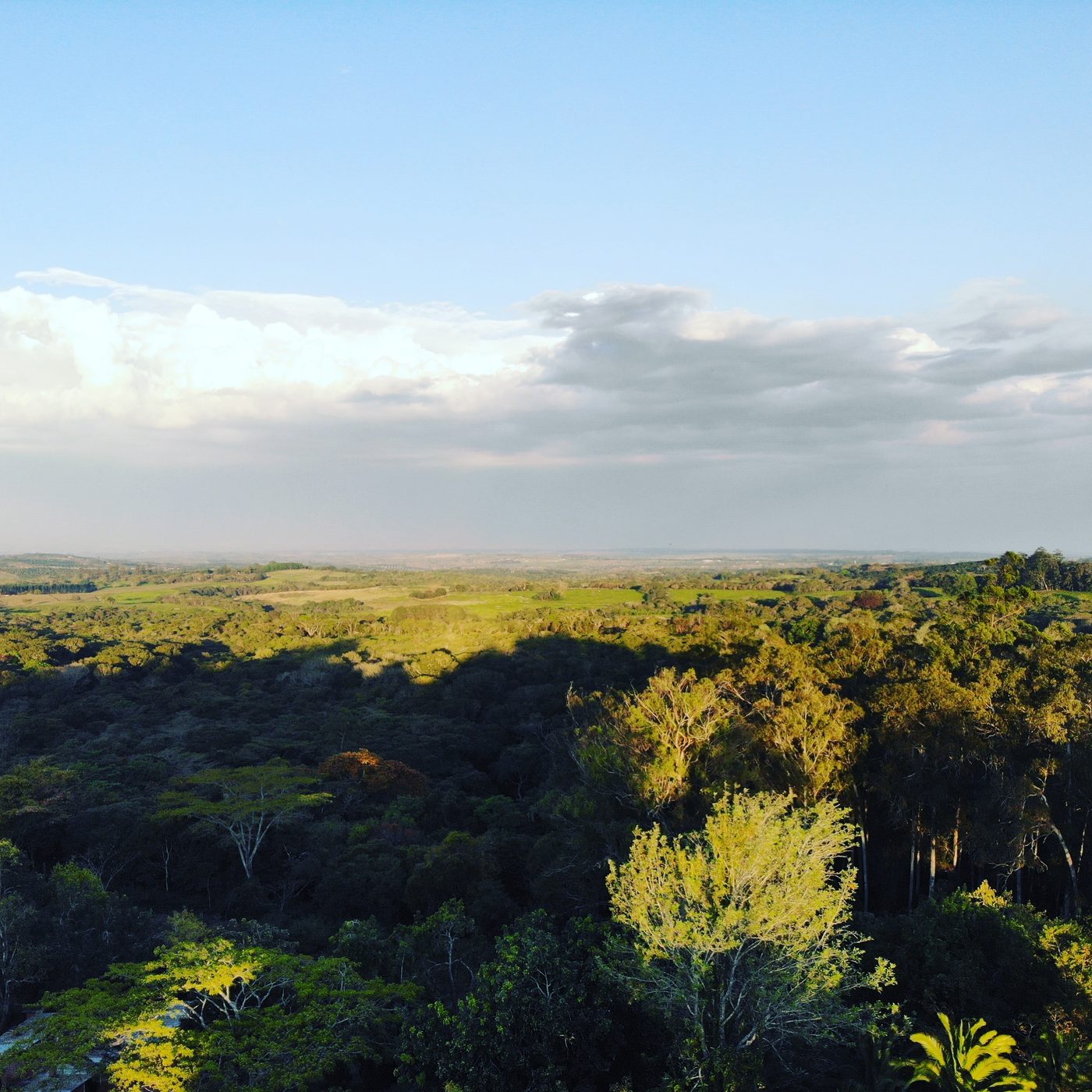
On a clear day, the summit of Chambe Peak Mulanje delivers one of the finest viewpoints in southern Africa. To the west, the Likhubula Valley drops away steeply, a patchwork of tea estates, forest fragments, and small farming communities stretching toward the Shire Highlands. The tea-green carpet of the lowlands is a striking contrast to the bare granite and grassland of the plateau.
To the east, the Mulanje plateau stretches toward Sapitwa and the central peaks — a rolling landscape of rock, grass, and scattered cedar forests that feels more like a Scottish moor than tropical Africa. On exceptionally clear days, you can see across the border into Mozambique, where the land flattens toward the coast.
The light at altitude is different. Sharper, cleaner, with a clarity that makes distant features look deceptively close. Dawn and late afternoon are the best times for photography — and another reason to stay overnight at the hut rather than rushing the day hike.
Looking south, you may catch a glimpse of the Phalombe Plain, and on the western horizon, the gentle rise of the Thyolo highlands where the tea estates of Conforzi and Satemwa unfold across the slopes. It is a useful reminder of how close the mountain is to civilisation — and how quickly you can be back in comfort after a demanding climb.
Chambe Hut — What to Expect Overnight
Chambe Hut is one of ten mountain huts maintained on the Mulanje Massif, and one of the most accessible. It sits on a grassy shelf with direct views of the south-east face of Chambe Peak — a wall of rock that turns gold and then pink as the sun sets behind you.
Facilities
- Capacity: 16 people across two large rooms, one of which has a cooking fireplace.
- Water: Piped drinking water to a nearby tap — reliable in most seasons.
- Toilets: Two pit latrines. Basic but functional.
- Cooking: Bring your own food. Pans and cutlery are available for rent at the hut. Your guide or porter can cook if arranged in advance.
- Extras: Reportedly, fresh Coke is sometimes available at the hut — carried up by enterprising locals. Do not count on it, but it is a wonderful surprise if it appears.
Booking
Chambe Hut must be booked and paid for in advance at the Forestry Office at Likabula Forest Station. Do not turn up hoping for a bed — especially during peak season (June to September) when the hut can fill up. For a comprehensive guide to all ten huts on the massif, see our Mulanje Mountain Huts booking guide.
What It Feels Like
Mountain huts strip away the unnecessary. There is no electricity, no phone signal, no menu. What you get instead is firelight, conversation with fellow hikers, and a silence so deep it takes an hour to stop noticing it. The night sky from the hut veranda — unpolluted by any artificial light — is worth the trip alone.
When to Go, What to Bring & Practical Tips
Best Season
The dry season from April to November is the best window for hiking Chambe Peak. June to September offers the clearest skies and coolest temperatures, though nights at altitude can drop close to freezing. Avoid the wet season (December to March) — trails become dangerously slippery, river crossings swell, and the chiperone mist can reduce visibility to a few metres for days at a time.
Costs (2025–2026 Estimates)
Exact fees change periodically and are not always published online. The following are best-available estimates — confirm at Likabula Forest Station before your trip:
- Guide: ~$30/day (covers groups of up to 10 people). Additional guide ~$25/day for larger groups.
- Porter: ~$20/day per porter.
- Hut fees: Previously very affordable (around MK 1,000/night), but current rates should be confirmed directly with the Forestry Office or the Mount Mulanje Conservation Trust (MMCT).
- Park entry permit: Required, purchased at Likabula. Contact the MMCT for current pricing.
- Guided packages: All-inclusive 2-day/1-night Chambe Peak packages are available from around $189/person through registered guides at Likabula, including meals, hut, guide, cook, and porter.
What to Pack
- Hiking boots: Ankle support and grip on wet rock are non-negotiable.
- Warm layers: A fleece and a windproof jacket. Nights at 2,500m+ are cold.
- Rain jacket: Even in the dry season, weather changes fast on Mulanje.
- Headtorch: Essential for early starts and hut evenings.
- Water: At least 2 litres for the ascent. Water purification tablets as backup.
- Food: For overnight stays, bring everything you need. There are no shops on the mountain.
- Sun protection: Hat, sunscreen, sunglasses. UV at altitude is fierce.
- Cash: All fees at Likabula are paid in Malawian kwacha. There are no ATMs on the mountain or in the immediate area — draw cash in Blantyre or Limbe before heading out.
Practical Tips
- Hire a porter. Seriously. The trail is steep and long, and having someone carry your overnight gear transforms the experience from a suffer-fest to an enjoyable hike.
- Start early. Clouds typically build by late morning. Starting at dawn gives you the best chance of clear summit views.
- Respect the guides. They are not just route-finders — they are custodians of the mountain. Tip fairly. The standard is around $5–10/day.
- Leave no trace. Carry out all rubbish. The mountain's UNESCO status brings responsibility as well as recognition.
Where to Stay Before and After Your Chambe Hike
Most hikers heading to Chambe Peak Mulanje overnight near the trailhead or in nearby Mulanje town. But if you want somewhere with character — a proper meal, a comfortable bed, and a garden to decompress in after the mountain — consider basing yourself in the Thyolo highlands, about an hour's drive west.
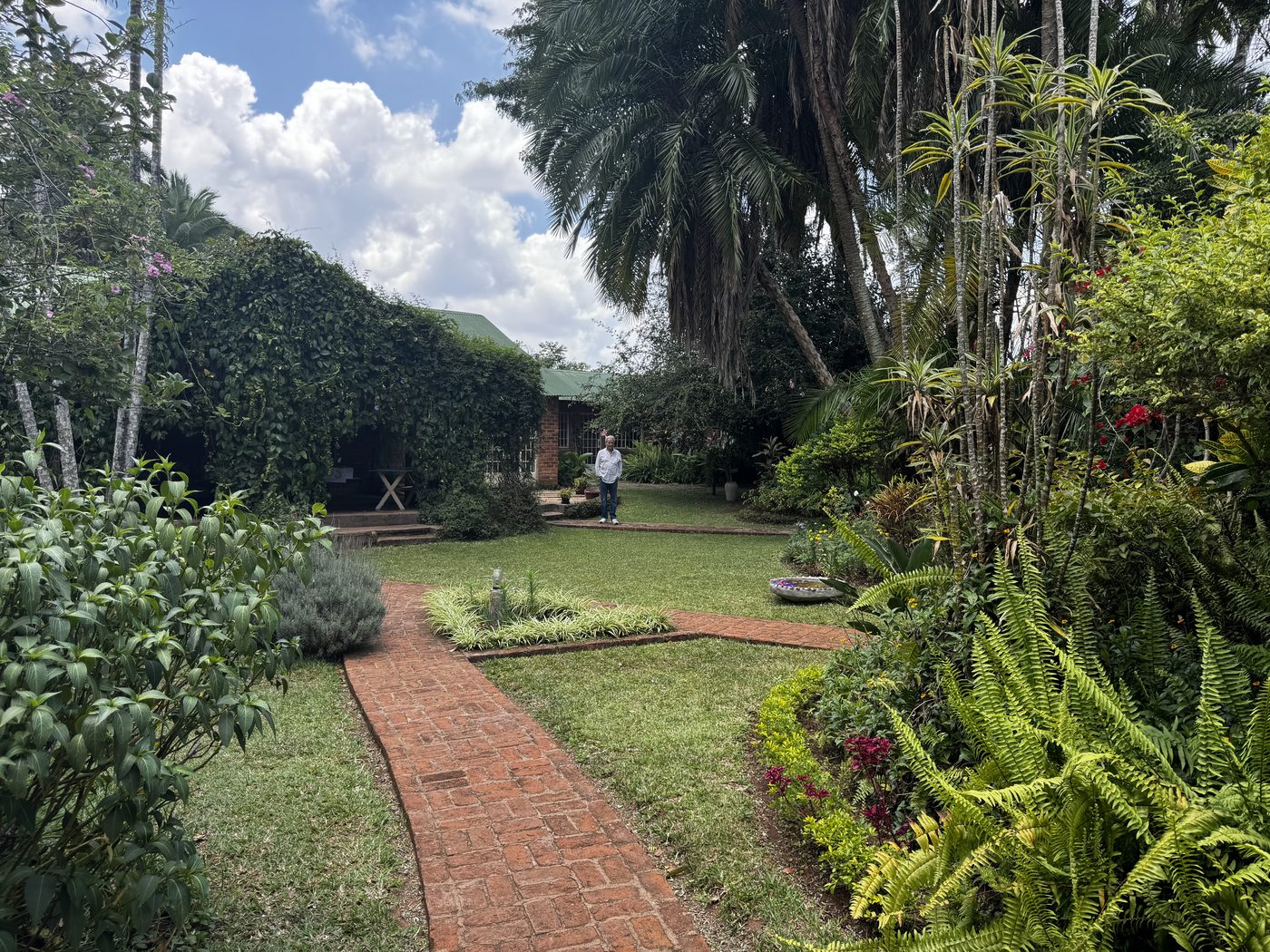
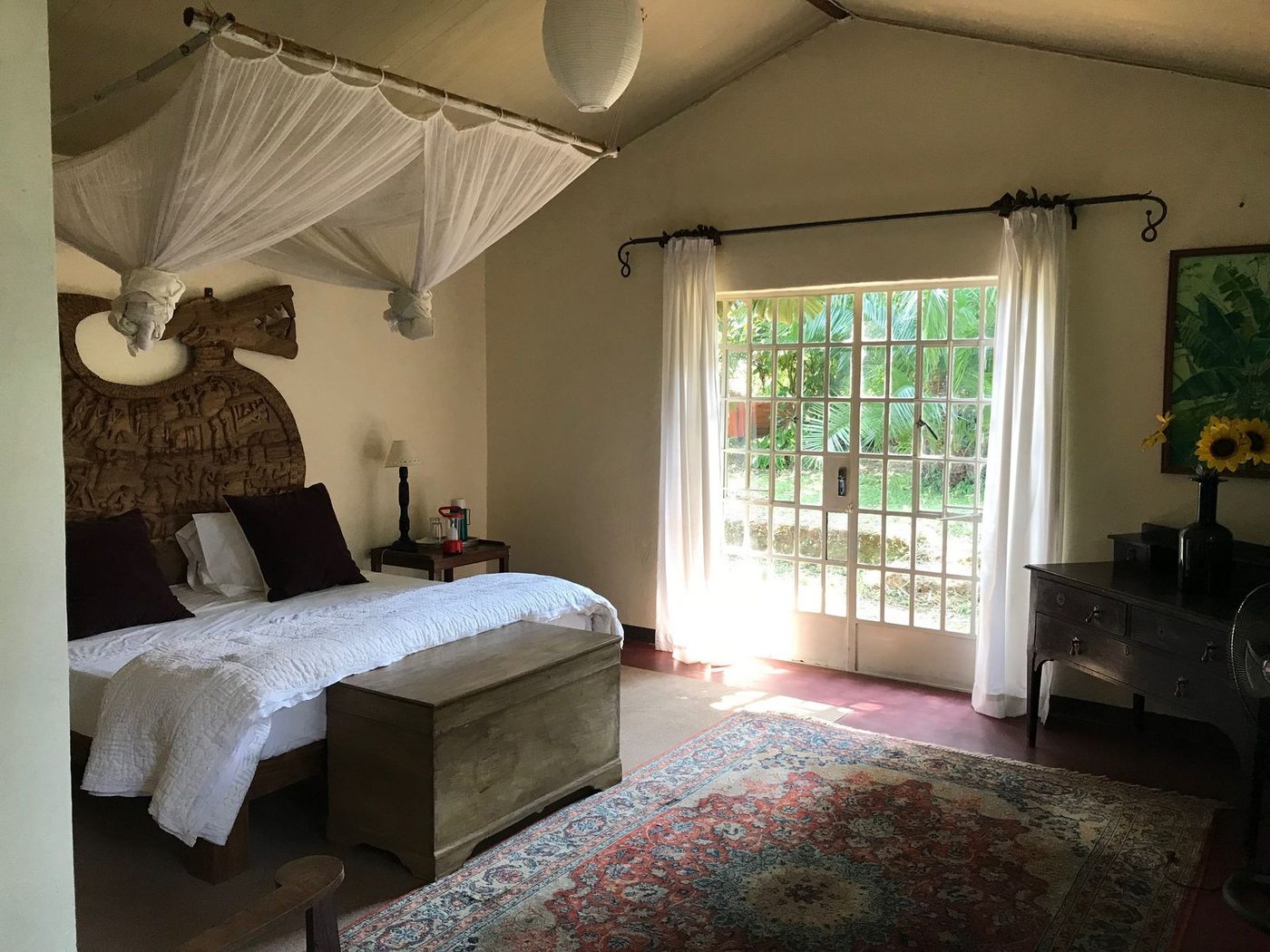
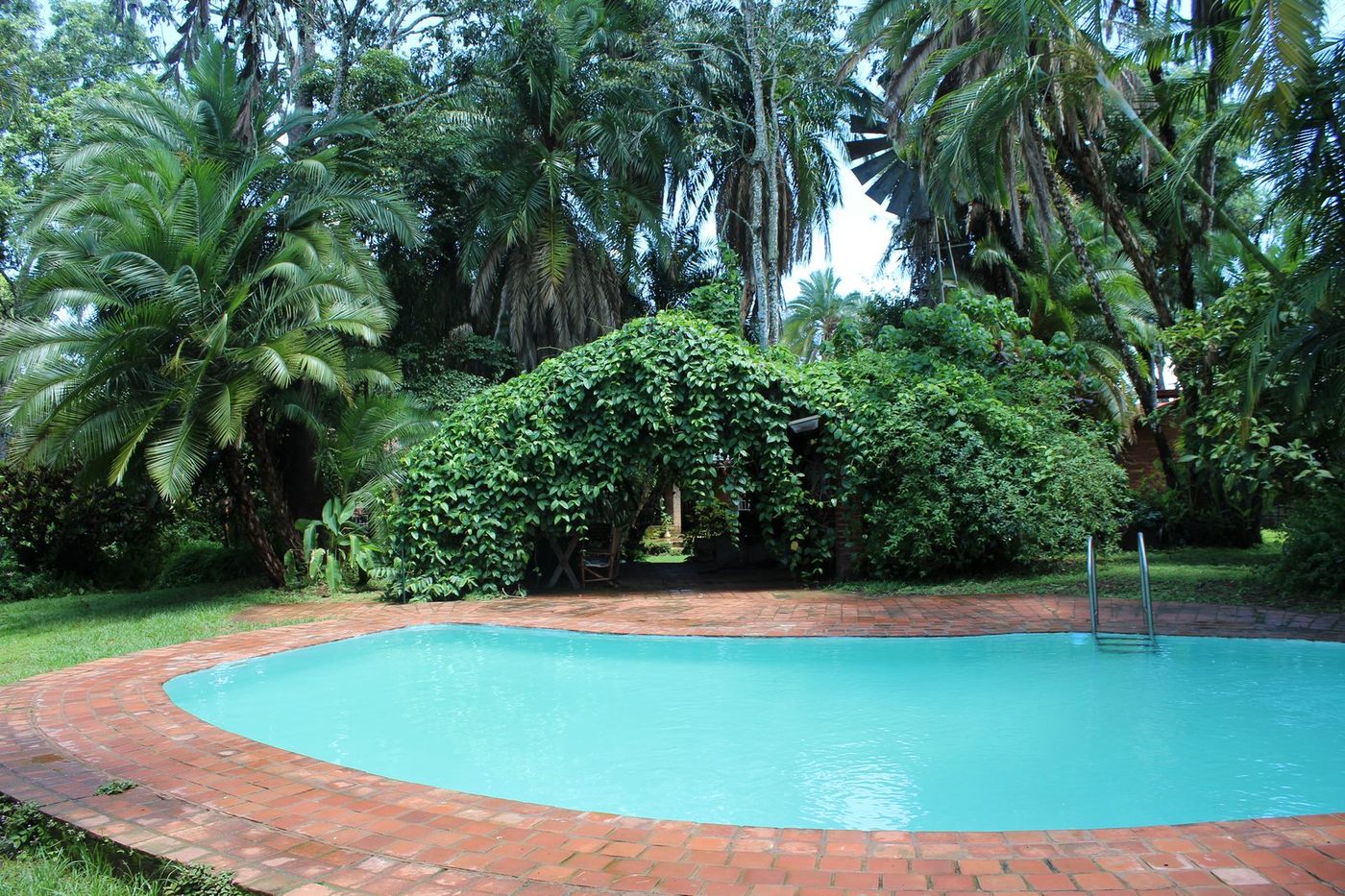
The Thyolo House sits on the historic Conforzi Tea Estate, a working tea plantation surrounded by indigenous forest and rolling gardens. It is a five-room boutique hotel run by Flavia Conforzi, an Italian-Malawian artist whose family has farmed this land for generations. The house has a swimming pool, forest trails from the doorstep, and an Italian fusion restaurant that uses herbs and vegetables from its own gardens. After two days of mountain huts and trail mix, it feels like an unreasonable luxury — in the best possible way.
The drive from The Thyolo House to Likabula Forest Station takes about an hour, making it a practical base for both pre-hike preparation and post-hike recovery. You can arrange transport and local logistics through the house — message us on WhatsApp and we will help you plan the details.
For those who want to stay closer to the mountain, Mulanje town and Likabula itself offer simpler options — guesthouses and lodges that cater to hikers. But if your trip allows it, combining a Chambe climb with a stay in Thyolo's tea country gives you two completely different sides of southern Malawi in a single trip: the raw altitude of the massif and the quiet, cultivated beauty of the highlands below.
If you are planning a longer Mulanje itinerary — perhaps combining Chambe with a Sapitwa summit attempt or exploring the Lichenya Plateau — The Thyolo House makes an ideal bookend. Start and finish in comfort, with the mountain in between.
However you choose to do it, Chambe Peak is one of Mulanje's great experiences. Not just for the summit views or the bragging rights of standing on Africa's longest rock face, but for the quiet, physical satisfaction of earning every metre of altitude with your own legs. The mountain does not give anything away for free. That is exactly what makes it worth climbing.
Ready to plan your Chambe Peak trip? Message us on WhatsApp or email thethyolohouse@gmail.com to book our boutique rooms and arrange transport to Likabula.